Empowering Families & Care Partners in Dementia Care.
The Dementia Advocate™ empowers families and care partners with the compassion, confidence, education, and advocacy tools needed to protect dignity, safety, and quality of life in dementia care.
Free · Confidential · No medical or personal records collected
Our Mission
Raising the standard of dementia care through dignity, compassion, and advocacy.
Dementia care should be guided by dignity, respect, patience, connection, advocacy, and preserved abilities. The Dementia Advocate™ empowers families and care partners with the confidence, compassion, education, and practical guidance needed to support a loved one at home, in memory care, assisted living, or a skilled nursing community.
Dignity First
Protecting the dignity, identity, and quality of life of the person living with dementia — in every setting and every interaction.
Compassionate Guidance
Practical, down-to-earth support for families and care partners navigating a diagnosis, a transition, or a difficult season.
Education & Empowerment
Knowledge, language, and tools that empower families and care partners to collaborate with care teams and make informed, loving decisions.
Advocacy & Protection
Guidance that empowers every care partner to protect dignity, strengthen communication, and raise the standard of dementia care in every setting.
Our Approach
A Dignity-Led Approach to Dementia Care
Dignity-led dementia care begins with the person — their identity, abilities, preferences, emotions, history, purpose, and need for meaningful connection.
The Dementia Advocate™ believes in empowering families and care partners to meet the person living with dementia where they are, support independence whenever possible, and protect dignity through patience, compassion, respect, and person-centered care.
Care partners serve as guides, supporters, and facilitators — not as people who simply manage tasks or take control. The relationship is respectful, collaborative, and centered on dignity, patience, and connection.
Begin With Who They Are
Start with the person's identity, abilities, preferences, emotions, history, and purpose — the parts that are present every day.
Meet Them Where They Are
Step into their reality with patience and warmth, rather than asking them to step into ours.
Guides, Not Managers
Care partners serve as guides, supporters, and facilitators — never as people who take control or simply manage tasks.
Person-Centered Dignity
Support independence whenever possible and protect dignity through compassion, respect, and collaboration.
Understanding Dementia
Learn the Differences
Knowledge that can change the quality of someone's life.
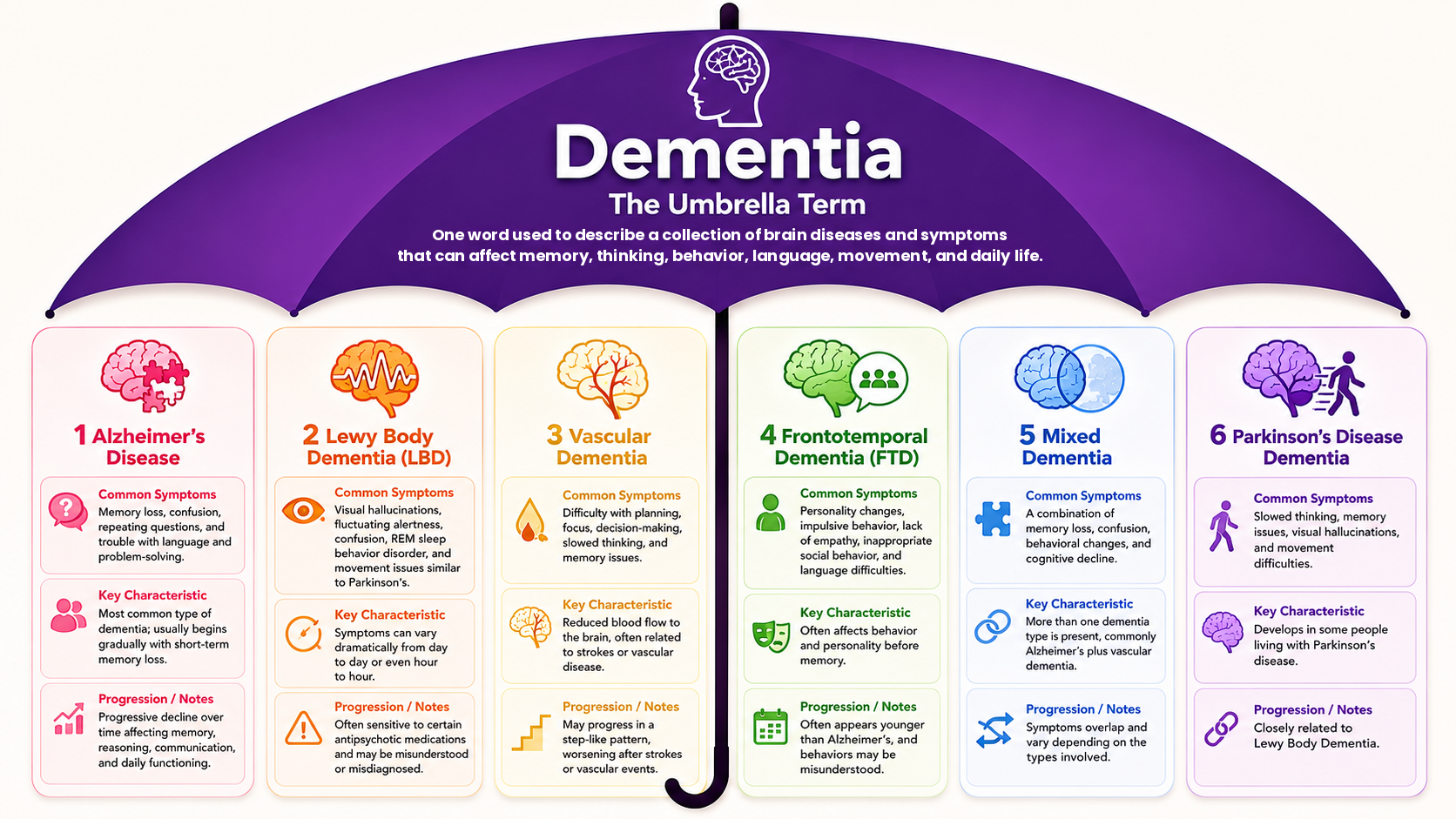
Dementia is an umbrella term that describes many brain diseases and conditions, each with its own symptoms, patterns, and care needs. Tap the types below to learn more about each one.
For educational purposes. Always consult a qualified healthcare professional for diagnosis and care guidance.
Dignity-Centered Care Checklist
A partnership-minded way to reflect on the care your loved one is receiving
Eight gentle, person-centered categories — dignity, communication, comfort, connection, and more. Yes, no, or unsure is all that's needed. There are no wrong answers, only honest noticing on behalf of someone you love.
Before you begin
Whether care is provided by family, friends, in-home support, or a professional care team, this checklist is meant to be answered from the perspective of a care partner. Choose a specific visit, week, shift, or setting as the focus. The goal is not to criticize — it is to reflect honestly, protect dignity, and support the person living with dementia well.
Takes about 5–7 minutes. Your progress is saved automatically on this device, so you can step away and return whenever you're ready.
8 person-centered categories of dignity-led care
Yes, No, or Unsure for each gentle question
A clear, color-coded reflection at the end
Free Resource
Save This Checklist
Get the free Dignity-Centered Care Checklist delivered to your inbox — a warm, person-centered guide you can fill out on any device or print it out.
For Families
Helpful Dementia Care Resources
Trusted programs and information to support families and care partners on the dementia care journey.
Medicare GUIDE Model
Guiding an Improved Dementia Experience
External Resource
The GUIDE Model is a Traditional Medicare program created to help people living with dementia and their unpaid care partners receive support while navigating dementia care.
Through participating care providers, the program may offer care navigation, caregiver education, respite support, and help when questions, challenges, or difficult care situations arise.
Key supports may include
Dementia care navigation
Care coordination and connection to local resources
Care partner education and support
Respite services for eligible participants
24/7 access to support for urgent questions or concerns
Eligibility generally includes
A diagnosis of Alzheimer's disease or another dementia
Program availability, eligibility, benefits, and participating providers may vary. Families should review the official CMS and Alzheimer's Association resources for the most current information.
Center for Applied Research in Dementia
Montessori-Inspired Dementia Training & Resources
The Center for Applied Research in Dementia offers Montessori-inspired dementia training and resources designed to support person-centered care, meaningful engagement, preserved abilities, respect, dignity, and quality of life for people living with dementia.
This resource may be helpful for families, home care partners, professionals, and organizations interested in learning more about Montessori-informed dementia care and how to create supportive environments that encourage independence, purpose, and connection.
A note on Montessori-inspired care
The Dementia Advocate™ recognizes the value of Montessori-inspired dementia care principles, including purposeful activity, invitation to participate, choice, visual cues, pacing, step-by-step support, and meaningful engagement. These principles are commonly associated with the Montessori Inspired Lifestyle® approach developed by Cameron J. Camp III & Associates.
Educational note: The Montessori-inspired information and linked training are shared for educational and informational purposes only. They are not medical, clinical, or legal advice, and are not a substitute for guidance from a qualified healthcare professional or attorney. Always consult your loved one's care team for decisions about their care.
This is an external educational resource. Training options, course availability, fees, and credentials may change, so visitors should review the official CARD website for current details.
Trinity Dementia Training
Dementia Education, Montessori Training & Professional Development
Trinity Dementia Training offers dementia education and Montessori-focused training designed to help care partners, professionals, and organizations strengthen dementia knowledge, improve care approaches, and support quality of life for people living with dementia.
This resource may be helpful for families, professional care partners, senior care teams, and organizations interested in dementia education, Montessori-informed care, and training connected to CDP® and CMDCP® certification pathways.
Key areas of focus may include
Dementia education and training
Montessori dementia care training
Care partner education
Professional development for dementia care teams
CDP® and CMDCP® certification-related training pathways
Educational note: Trinity Dementia Training and the information shared here are provided for educational and informational purposes only. They are not medical, clinical, or legal advice, and are not a substitute for guidance from a qualified healthcare professional or attorney. Always consult your loved one's care team for decisions about their care.
Training options, course availability, fees, credentials, and certification requirements may change. Visitors should review the official Trinity Dementia Training website and the appropriate credentialing organizations for the most current information.
Advocacy is love in action.
You do not need a medical background to advocate with dignity. You need compassion, education, language, and the confidence to ask meaningful questions. The Dementia Advocate™ exists to empower families and care partners with guidance, resources, and dignity-led advocacy tools.
Use this form for general messages, collaboration inquiries, or media/book-related communication regarding The Dementia Advocate™.
Your privacy matters. Please do not include medical records, legal documents, Social Security numbers, dates of birth, addresses, financial information, facility names connected to specific incidents, or other private personal details. This form is for general communication only and is not for emergencies, medical advice, legal advice, case management, or crisis support.
If someone is in immediate danger, contact emergency services or the appropriate protective agency in your area.
Follow
Follow The Dementia Advocate™
Stay connected for dignity-led dementia care education, advocacy guidance, resources, and future updates.